Results of scientific research on the health properties of Lion's Mane mushroom and innovative production technology applied in the project
- Characterization of the health properties of Lion's Mane mushroom.
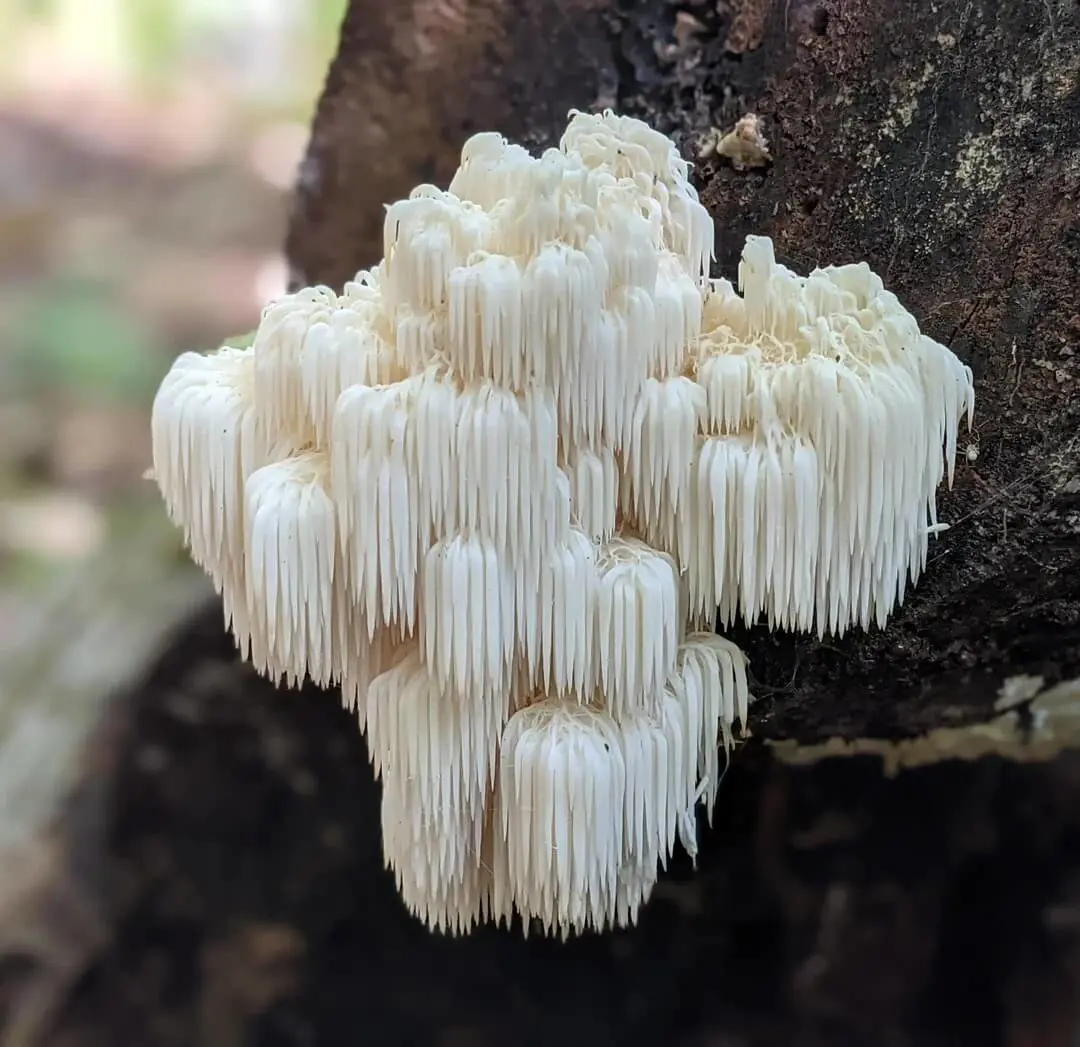
Lion's Mane mushroom (Hericium erinaceus) is a fungal species with high health-promoting properties. Long-term tests conducted have shown no toxicity, including genotoxicity, to the human body (Chen et al. 2022). In scientific literature, numerous reports can be found confirming that secondary metabolites produced in Lion's Mane mushroom fruiting bodies exhibit, among others, antioxidant, anti-inflammatory, anti-allergic, bactericidal activity, and alleviate depressive states (Khan et al. 2013, Phan et al. 2014, Friedman 2015, Sokol et al. 2015, Jiang et al. 2016, Li et al. 2018, Hetland et al. 2020). Polysaccharides, β- and α-glucans, in turn, show immunostimulating and anti-cancer effects, support proper microbiome condition and lower cholesterol levels (Malinowska et al. 2008, Kim et al. 2011a, 2011b, Diling et al. 2017a, 2017b, He et al. 2017, Yang et al. 2021). For Hericium erinaceus metabolites, hericenones and erinacines, demonstrate the ability to stimulate nerve growth factor (NGF) synthesis, which is extremely important in supporting therapy for neurodegenerative diseases, such as Parkinson's disease, Alzheimer's disease, Huntington's disease, multiple sclerosis, and supporting proper nervous system and brain function, including memory and concentration processes (Phan et al. 2014, Li et al. 2018, Skubel et al. 2022). A comprehensive review of scientific literature and results of own research related to obtaining and analyzing secondary metabolites of Lion's Mane mushroom were presented in a scientific publication by Dr. hab. Mirosław Mleczek as part of the project implementation.
- The influence of cultivation conditions on yield and quality of Lion's Mane mushroom fruiting bodies.
In the first stage of the planned R&D work, optimization of the Lion's Mane mushroom cultivation process is intended. This will include modification of growing substrates through the addition of organic agriculture waste products (including coffee husks, chokeberry pomace). It is widely known that the yield level and content of bioactive compounds in cultivated Lion's Mane fruiting bodies is closely linked to the composition of the substrate used (Siwulski and Sobieralski, 1998, 2005, Pawlak et al., 2003, Siwulski and Zawirska-Wojtasiak, 2007). Most commonly, the growing substrate contains hardwood sawdust and additives such as: wheat and rice straw, cotton hulls, corn cobs, bran or cereal grains, sugarcane production waste, bone and soy meal, sucrose. Substrate fortification is also applied through the addition of micro- and macroelements as well as antioxidants, which significantly affects the health-promoting functionality of Lion's Mane fruiting bodies. The content of active compounds in mushroom fruiting bodies also depends on the variety used (Siwulski et al., 2009). Therefore, it is planned to introduce 4 different mushroom varieties into cultivation to select the variety with the highest quality and functional parameters. During mushroom cultivation, the greatest threat is the development of mold and other microorganisms, which has an adverse effect on yield and bioactive compound content in fruiting bodies (Kim et al., 2016, Ghimire et al., 2021). Additionally, microorganisms present in mushroom fruiting bodies pose a consumer safety risk (Kragh et al., 2022). Therefore, to reduce microbiological contamination of the cultivation hall environment and substrates, air purifiers utilizing cold plasma and photocatalytic oxidation phenomena are intended to be used. These purifiers work by emitting a mixture of ionized and non-ionized particles, atoms in ground and excited states, free radicals, including reactive oxygen species (ROS) and reactive nitrogen species (RNS), as well as electrons and photons. These reactive particles damage microorganism cells through disintegration of the cell wall and membrane as well as degradation of genetic material (Katsigiannis et al., 2022, Veerana et al., 2022). The applied innovative method of mushroom cultivation environment disinfection will enable increased yield and reduced contamination of fruiting bodies with mold spores and other microorganisms. Finally, in this stage, sensory quality assessment of fruiting bodies from 4 Lion's Mane varieties will be performed, assessment of bioactive compound content (antioxidants, β- and α-glucans), and microbiological quality assessment, which will allow selection of the variety with the highest quality and functional parameters, which will be the raw material for dried product production and dried-based products in subsequent project implementation stages.
- Impact of innovative production technology on the quality and functionality of dried mushrooms and products based on dried mushrooms.
The content of bioactive compounds during mushroom processing depends largely on the applied conditions. In the case of drying Lion's Mane mushroom fruiting bodies, drying time and temperature are very important parameters (Gąsecka et al., 2020). During the project implementation, a pilot innovative technological line for dried mushroom production is intended to be used, containing prototype devices equipped with disinfection modules containing cold plasma generators (mushroom dryers and grinder), which will allow for hygienic dried mushroom production (Katsigiannis et al., 2022, Veerana et al., 2022). To maximize the reduction of active compound losses before the drying process, electroporation of mushroom cells using pulsed electric field (PEF) is intended to be applied. Pulsed electric field (PEF) pretreatment is a promising technology that allows for shortening drying time and lowering drying temperature, making the process energy-efficient, and the resulting dried product is characterized by high health quality compared to conventional drying methods (Liu et al., 2019, Ostermeier et al., 2020). Additionally, there is a reduction in microbiological contamination of the raw material, as PEF electroporation destroys microorganism cells. Ostermeier et al. (2018) showed that using PEF as pretreatment resulted in even 30% reduction in onion drying time. It is worth noting that the additional energy expenditure for PEF treatment (0.2–20 kJ/kg) is relatively low, considering the energy expenditure for the actual drying process (4–6 MJ/kg of evaporated water). Using PEF before the drying process allows for obtaining a high-quality product, energy savings, cost reduction, increased throughput, and achieving sustainable development goals. Since a significant group of consumers prefers consuming encapsulated products with defined nutritional value, it is planned to produce encapsulated products based on dried Lion's Mane mushroom fruiting bodies using the addition of microcapsules containing organic freeze-dried aronia pomace. Aronia pomace exhibits strong antioxidant properties and antifungal activity (Zhang et al. 2021; Sady et al. 2021). However, bioactive compounds contained in the pomace are very sensitive to external environmental conditions, processing and storage (temperature, oxygen, light) and conditions prevailing in the digestive tract (pH and enzymes). Therefore, in order to preserve bioactivity and maintain active form of biomolecules, extend shelf life and targeted release in the body throughout the entire digestive tract, microencapsulation based on kudzu root starch and inulin is planned. Kudzu root starch exhibits strong anti-inflammatory effects against colonocytes, used in treating inflammatory bowel conditions (Wang et al. 2020). Inulin, on the other hand, exhibits immunomodulator properties and serves as food for the intestinal microbiome (Gibson & Kolida, 2007; Silva, Cooper, & Petrovsky, 2004). The production of encapsulated dried mushrooms will be carried out using a pilot technological line, which will include a prototype spray dryer and encapsulator equipped with disinfection modules. Spray drying is the cheapest method of microencapsulation, i.e., protecting bioactive substances by enclosing them inside another material (Gharsallaoui et al. 2007). This will enable protection of bioactive substances in aronia pomace and controlled and gradual release of these substances throughout the entire digestive tract. The final result of the operation will be dried Lion's Mane mushroom fruiting bodies, encapsulated dried mushrooms, and encapsulated dried mushrooms with the addition of microcapsules containing organic aronia pomace with high quality and functional parameters.
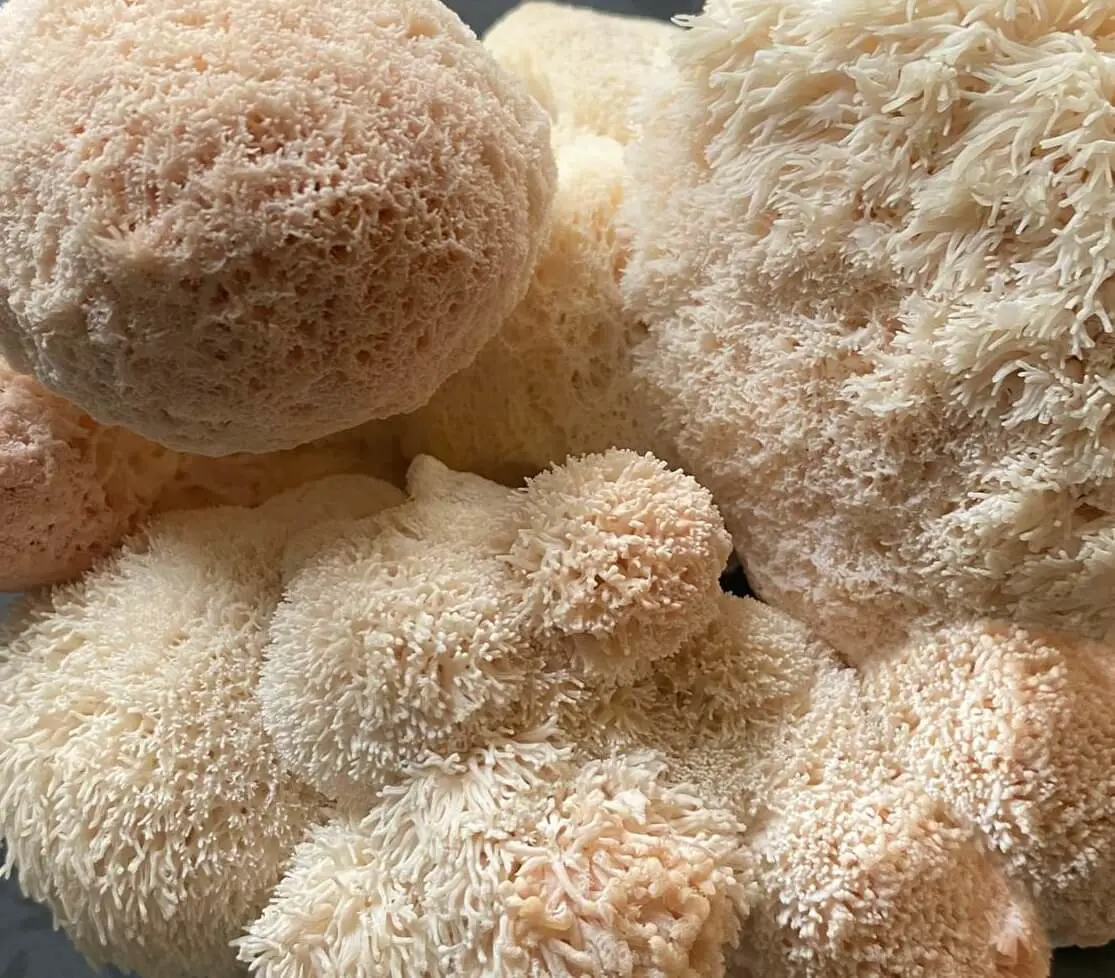
Lion's Mane mushroom (Hericium erinaceus)
Source: own archive
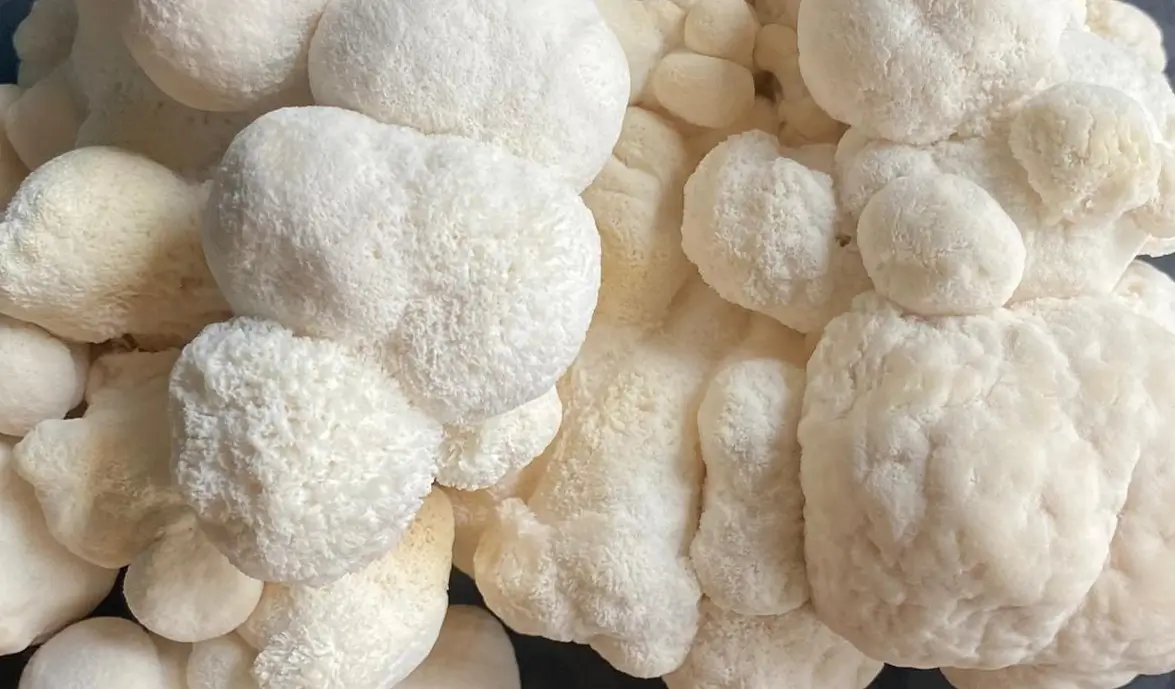
Lion's Mane mushroom (Hericium erinaceus)
Source: own archive