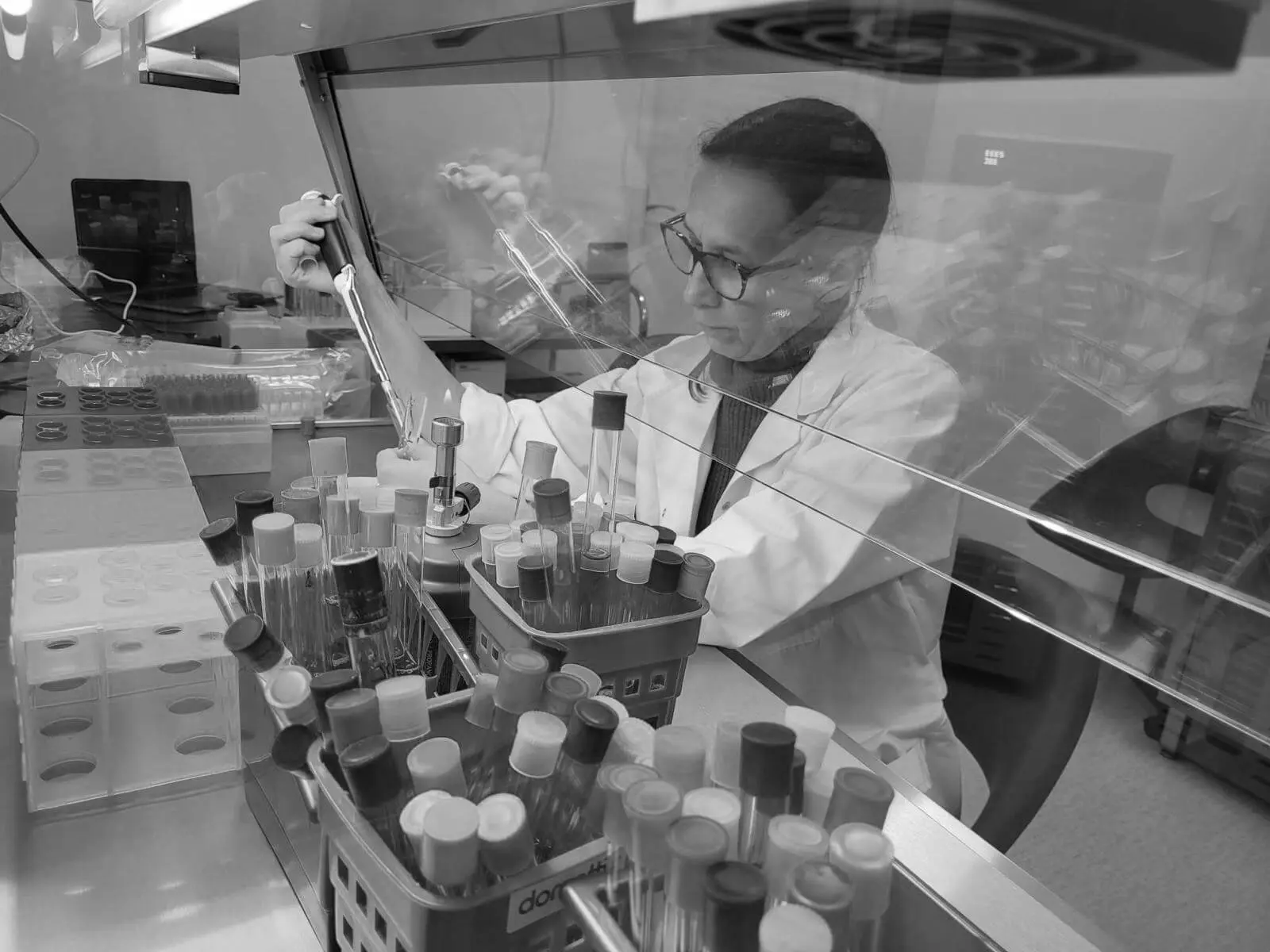
Results of scientific research on the health properties of Lion's Mane mushroom and innovative production technology applied in the project
Chen, S. N., Chang, C. S., Yang, M. F., Chen, S., Soni, M., & Mahadevan, B. (2022). Subchronic toxicity and genotoxicity studies of Hericium erinaceus β-glucan extract preparation. Current Research in Toxicology, 3, 100068. https://doi.org/10.1016/j.crtox.2022.100068 Diling, C., Chaoqun, Z., Jian, Y., Jian, L., Jiyan, S., Yizhen, X., & Guoxiao, L. (2017). Immunomodulatory activities of a fungal protein extracted from Hericium erinaceus through regulating the gut microbiota. Frontiers in Immunology, 8, 666. https://doi.org/10.3389/fimmu.2017.00666 Diling, C., Xin, Y., Chaoqun, Z., Jian, Y., Xiaocui, T., Jun, C., Ou, S., & Yizhen, X. (2017). Extracts from Hericium erinaceus relieve inflammatory bowel disease by regulating immunity and gut microbiota. Oncotarget, 8(49), 85838–85857. https://doi.org/10.18632/oncotarget.20689 Friedman, M. (2015). Chemistry, nutrition, and health-promoting properties of Hericium erinaceus (Lion's Mane) mushroom fruiting bodies and mycelia and their bioactive compounds. Journal of Agricultural and Food Chemistry, 63(32), 7108–7126. https://doi.org/10.1021/acs.jafc.5b02914 Gąsecka, M., Siwulski, M., Magdziak, Z., Budzyńska, S., Stuper-Szablewska, K., Niedzielski, P., & Mleczek, M. (2020). The effect of drying temperature on bioactive compounds and antioxidant activity of Leccinum scabrum (Bull.) Gray and Hericium erinaceus (Bull.) Pers. Journal of Food Science and Technology, 57(2), 513–525. https://doi.org/10.1007/s13197-019-04081-1 Gharsallaoui, A., Roudaut, G., Chambin, O., Voilley, A., & Saurel, R. (2007). Applications of spray-drying in microencapsulation of food ingredients: An overview. Food Research International, 40, 1107–1121. Ghimire, A., Pandey, K. R., Joshi, Y. R., & Subedi, S. (2021). Major fungal contaminants of mushrooms and their management. International Journal of Applied Sciences and Biotechnology, 9(2), 80–87. https://doi.org/10.3126/ijasbt.v9i2.37513 Gibson, G. R., & Kolida, S. (2007). Prebiotic capacity of inulin-type fructans. The Journal of Nutrition, 137, 2503S–2506S. He, X., Wang, X., Fang, J., Chang, Y., Ning, N., Guo, H., Huang, L., Huang, X., & Zhao, Z. (2017). Structures, biological activities, and industrial applications of the polysaccharides from Hericium erinaceus (Lion's Mane) mushroom: A review. International Journal of Biological Macromolecules, 97, 228–237. https://doi.org/10.1016/j.ijbiomac.2017.01.040 Hetland, G., Tangen, J. M., Mahmood, F., Mirlashari, M. R., Nissen-Meyer, L., Nentwich, I., Therkelsen, S. P., Tjønnfjord, G. E., & Johnson, E. (2020). Antitumor, anti-inflammatory and antiallergic effects of Agaricus blazei mushroom extract and the related medicinal basidiomycetes mushrooms, Hericium erinaceus and Grifola frondosa: A review of preclinical and clinical studies. Nutrients, 12(5), 1339. https://doi.org/10.3390/nu12051339 Jiang, S., Wang, Y., & Zhang, X. (2016). Comparative studies on extracts from Hericium erinaceus by different polarity reagents to gain higher antioxidant activities. Experimental and Therapeutic Medicine, 12(1), 513–517. https://doi.org/10.3892/etm.2016.3279 Katsigiannis, A. S., Bayliss, D. L., & Walsh, J. L. (2022). Cold plasma for the disinfection of industrial food-contact surfaces: An overview of current status and opportunities. Comprehensive Reviews in Food Science and Food Safety, 21(2), 1086–1124. https://doi.org/10.1111/1541-4337.12885 Khan, M., Tania, M., Liu, R., & Rahman, M. (2013). Hericium erinaceus: An edible mushroom with medicinal values. Journal of Complementary and Integrative Medicine, 10(1), 253–258. https://doi.org/10.1515/jcim-2013-0001 Kim, S. P., Kang, M. Y., Choi, Y. H., Kim, J. H., Nam, S. H., & Friedman, M. (2011). Mechanism of Hericium erinaceus (Yamabushitake) mushroom-induced apoptosis of U937 human monocytic leukemia cells. Food & Function, 2, 348–356. Kim, S. P., Kang, M. Y., Kim, J. H., Nam, S. H., & Friedman, M. (2011). Composition and mechanism of antitumor effects of Hericium erinaceus mushroom extracts in tumor-bearing mice. Journal of Agricultural and Food Chemistry, 59, 9861–9869. Kim, C., Nartea, T. J., Pao, S., Li, H., Jordan, K. L., Xu, Y., Stein, R. A., & Sismour, E. N. (2016). Evaluation of microbial loads on dried and fresh shiitake mushrooms (Lentinula edodes) as obtained from internet and local retail markets, respectively. Food Safety, 4(2), 45–51. https://doi.org/10.14252/foodsafetyfscj.2016005 Kragh, M. L., Obari, L., Caindec, L. A., Jensen, H. A., & Hansen, L. T. (2022). Survival of Listeria monocytogenes, Bacillus cereus and Salmonella Typhimurium on sliced mushrooms during drying in a household food dehydrator. Food Control, 134, 108715. https://doi.org/10.1016/j.foodcont.2021.108715 Krzyczkowski, W. (2012). Izolacja metabolitów niskocząsteczkowych z hodowli wgłębnej grzybni soplówki jeżowatej (Hericium erinaceum) [Doctoral dissertation]. Warszawski Uniwersytet Medyczny, Wydział Farmaceutyczny. Lewandowski, R., & Jóźwik, P. (2017). Aktualne techniki oczyszczania powietrza z czynników biologicznych. Hygeia Public Health, 52(2), 103–110. Li, I. C., Lee, L. Y., Tzeng, T. T., Chen, W. P., Chen, Y. P., Shiao, Y. J., & Chen, C. C. (2018). Neurohealth properties of Hericium erinaceus mycelia enriched with erinacines. Behavioural Neurology, 2018, 5802634. https://doi.org/10.1155/2018/5802634 Liu, Z., Esveld, E., Vincken, J. P., & Bruins, M. E. (2019). Pulsed electric field as an alternative pre-treatment for drying to enhance polyphenol extraction from fresh tea leaves. Food and Bioprocess Technology, 12, 183–192. Malinowska, E., Krzyczkowski, W., & Herold, F. (2008). Pozyskiwanie, budowa i działanie biologiczne polisacharydów grzybowych na przykładzie soplówki jeżowatej (Hericium erinaceum). Biotechnologia, 1(80), 109–121. Mizgier-Gralińska, P. (2019). Zastosowanie suszenia rozpyłowego do stabilizacji antocyjanów [Doctoral dissertation]. Uniwersytet Przyrodniczy we Wrocławiu, Wydział Biotechnologii i Nauk o Żywności. Nawirska, A., Sokół-Łętowska, A., & Kucharska, A. Z. (2007). Właściwości przeciwutleniające wytłoków z wybranych owoców kolorowych. Żywność. Nauka. Technologia. Jakość, 4(53), 120–125. Ostermeier, R., Parniakov, O., Töpfl, S., & Jäger, H. (2020). Applicability of pulsed electric field (PEF) pre-treatment for a convective two-step drying process. Foods, 9(4), 512. https://doi.org/10.3390/foods9040512 Ostermeier, R., Giersemehl, P., Siemer, C., Töpfl, S., & Jäger, H. (2018). Influence of pulsed electric field (PEF) pre-treatment on the convective drying kinetics of onions. Journal of Food Engineering, 237, 110–117. Phan, C. W., Lee, G. S., Hong, S. L., Wong, Y. T., Brkljača, R., Urban, S., Abd Malek, S. N., & Sabaratnam, V. (2014). Hericium erinaceus (Bull.: Fr) Pers. cultivated under tropical conditions: Isolation of hericenones and demonstration of NGF-mediated neurite outgrowth in PC12 cells via MEK/ERK and PI3K-Akt signaling pathways. Food & Function, 5(12), 3160–3169. https://doi.org/10.1039/c4fo00452c Sikora, J., Markowicz, M., & Mikiciuk-Olasik, E. (2009). Rola i właściwości lecznicze aronii czarnoowocowej w profilaktyce chorób cywilizacyjnych. Bromatologia i Chemia Toksykologiczna, 42(1), 10–17. Silva, D. G., Cooper, P. D., & Petrovsky, N. (2004). Inulin-derived adjuvants efficiently promote both Th1 and Th2 immune responses. Immunology and Cell Biology, 82, 611–616. Siwulski, M., & Sobieralski, K. (2005). Influence of some growing substrate additives on the Hericium erinaceus (Bull. Fr.) Pers. yield. Scientific Works of the Lithuanian Institute of Horticulture and Lithuanian University of Agriculture. Horticulture and Vegetable Growing, 24(3), 250–253. Siwulski, M., Sobieralski, K., & Pawlak, R. (2006). Porównanie plonowania kilku odmian soplówki jeżowatej Hericium erinaceus (Bull.:Fr.) Pers. na podłożach z trocin różnych gatunków drzew liściastych. Folia Horticulturae, 2, 134–138. Siwulski, M., Sobieralski, K., & Wojniłowicz, M. (2009). Comparison of mycelium growth and yielding of selected strains of Hericium erinaceus (Bull. Fr.) Pers. on sawdust substrates with the glucose addition. Herba Polonica, 55(3), 266–272. Skubel, T., Budzyńska, J., Czarnota, J., Dobrzyński, M., Rybak, N., & Dudek, I. (2022). Potencjał terapeutyczny soplówki jeżowatej (Hericium erinaceus) w zaburzeniach neurologicznych i poznawczych - przegląd piśmiennictwa. Journal of Education, Health and Sport, 12(9), 498–504. Sokol, S., Golak-Siwulska, I., Sobieralski, K., Siwulski, M., & Gorka, K. (2015). Biology, cultivation, and medicinal functions of the mushroom Hericium erinaceum. Acta Mycologica, 50(2). Szumigaj-Tarnowska, J., Augustyniak, J., & Uliński, Z. (2021). Ocena występowania chorób infekcyjnych i identyfikacja patogenów w wybranych pieczarkarniach na terenie kraju. Instytut Ogrodnictwa – PIB. Veerana, M., Yu, N., Ketya, W., & Park, G. (2022). Application of non-thermal plasma to fungal resources. Journal of Fungi, 8(2), 102. https://doi.org/10.3390/jof8020102 Wieczorek, C. (2003). Mikologiczne skażenie żywności. Żywność, 3(36), 119–129. Wiktor, A., Śledź, M., Nowacka, M., & Witrowa-Rajchert, D. (2013). Możliwości zastosowania niskotemperaturowej plazmy w technologii żywności. Żywność. Nauka. Technologia. Jakość, 5(90), 5–14. Yang, Y., Ye, H., Zhao, C., Ren, L., Wang, C., Georgiev, M. I., Xiao, J., & Zhang, T. (2021). Value added immunoregulatory polysaccharides of Hericium erinaceus and their effect on the gut microbiota. Carbohydrate Polymers, 262, 117668. https://doi.org/10.1016/j.carbpol.2021.117668 Zhang, Y., Zhao, Y., Liu, X., Chen, X., Ding, C., Dong, L., Zhang, J., Sun, S., Ding, Q., Khatoom, S., Cheng, Z., Liu, W., Shen, L., & Xiao, F. (2021). Chokeberry (Aronia melanocarpa) as a new functional food relationship with health: An overview. Journal of Future Foods, 1(2), 168–178.